gizemkarakurt.com
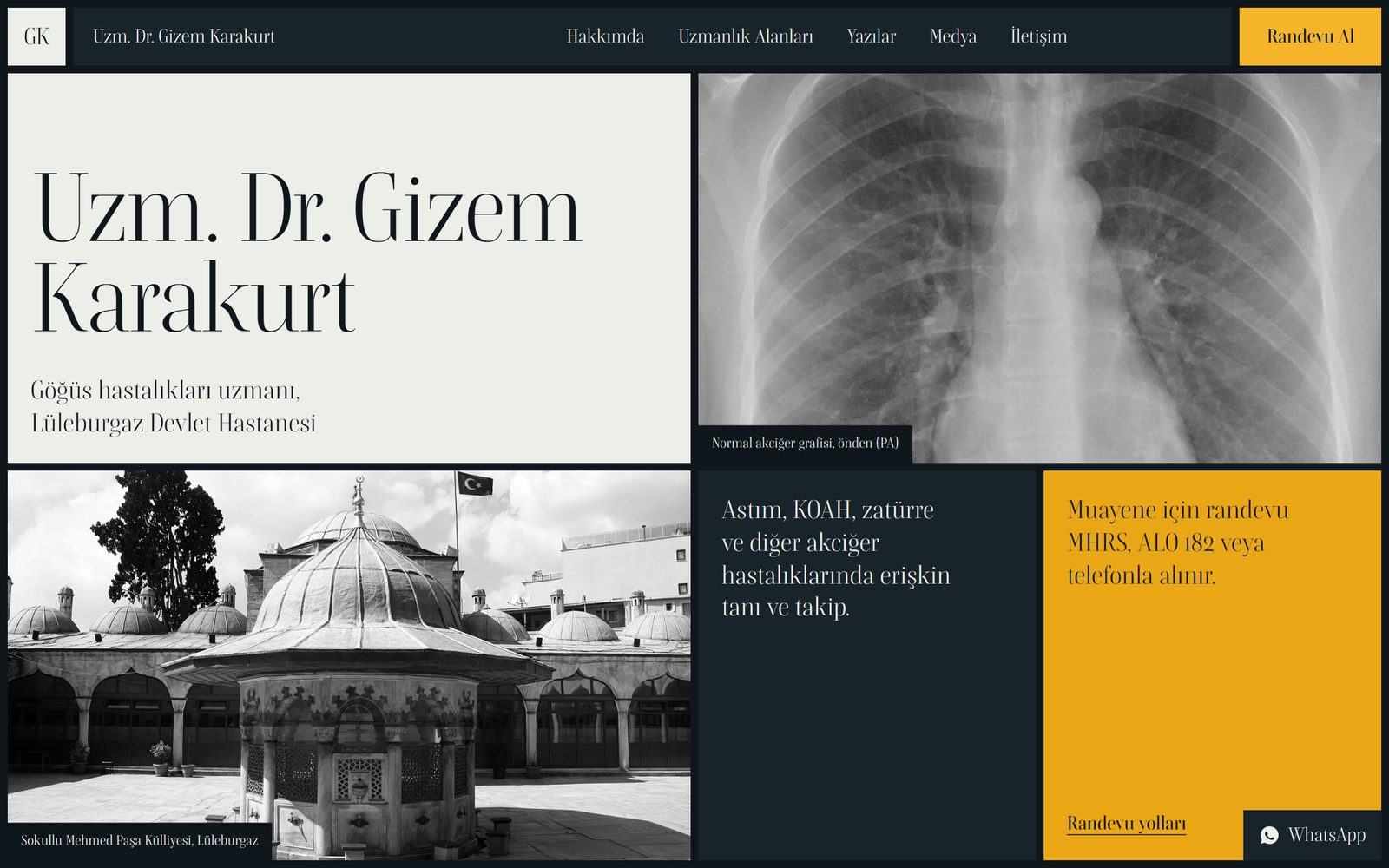
A Turkish-language website I developed for pulmonologist Uzm. Dr. Gizem Karakurt, with condition guides, articles, appointment guidance and privacy notices.
Website / digital experience · Personally developed
- Status
- Pre-launchThe site is built but not yet published. When I checked on 25 October 2026 the domain did not resolve, and the code still holds marked placeholders for contact details, booking, photography and legal review.
- My role
- I developed the website: the information architecture, the “Rapor” design in code, the condition and article templates, the appointment and contact pages, and the search and privacy groundwork.
- Operated by
- The medical practice belongs to Uzm. Dr. Gizem Karakurt. I developed the website only; I am not a clinician and do not provide healthcare services.
In plain words
- What it is
- A Turkish website for a chest-diseases specialist, designed like a printed medical report, with plain-language pages on common lung conditions, short articles and a clear explanation of how appointments work.
- Who it is for
- Adults looking for a pulmonologist in the region, and people searching for calm, reliable information on conditions such as asthma or COPD.
- The problem it addresses
- Patients need to know who the doctor is, which conditions she sees and how to get an appointment, without exaggerated promises. The site is written to inform rather than advertise.
Trust without promotion
Physician websites in Türkiye work under advertising restrictions, so the site could not use patient reviews, before-and-after stories or comparative claims. It had to be informative and still useful. Appointments also needed honesty: in the public hospital system they run through MHRS and ALO 182, so the site could not pretend to offer one-click online booking that does not exist.
The project started from nothing: no previous website and no visual identity. Credentials and biography could not be estimated or invented, so every unconfirmed detail had to stay visibly marked as a placeholder until the client supplied verified text. Nothing about her career was to appear on the site on assumption.
My role
I developed the website in plain HTML, CSS and vanilla JavaScript: the page structure, the condition and article templates, the home page symptom guide, the appointment and contact pages, the cookie banner and legal pages, the structured data and the launch checklist. The medical content, credentials and final legal texts are the client's to supply and approve.
What was built
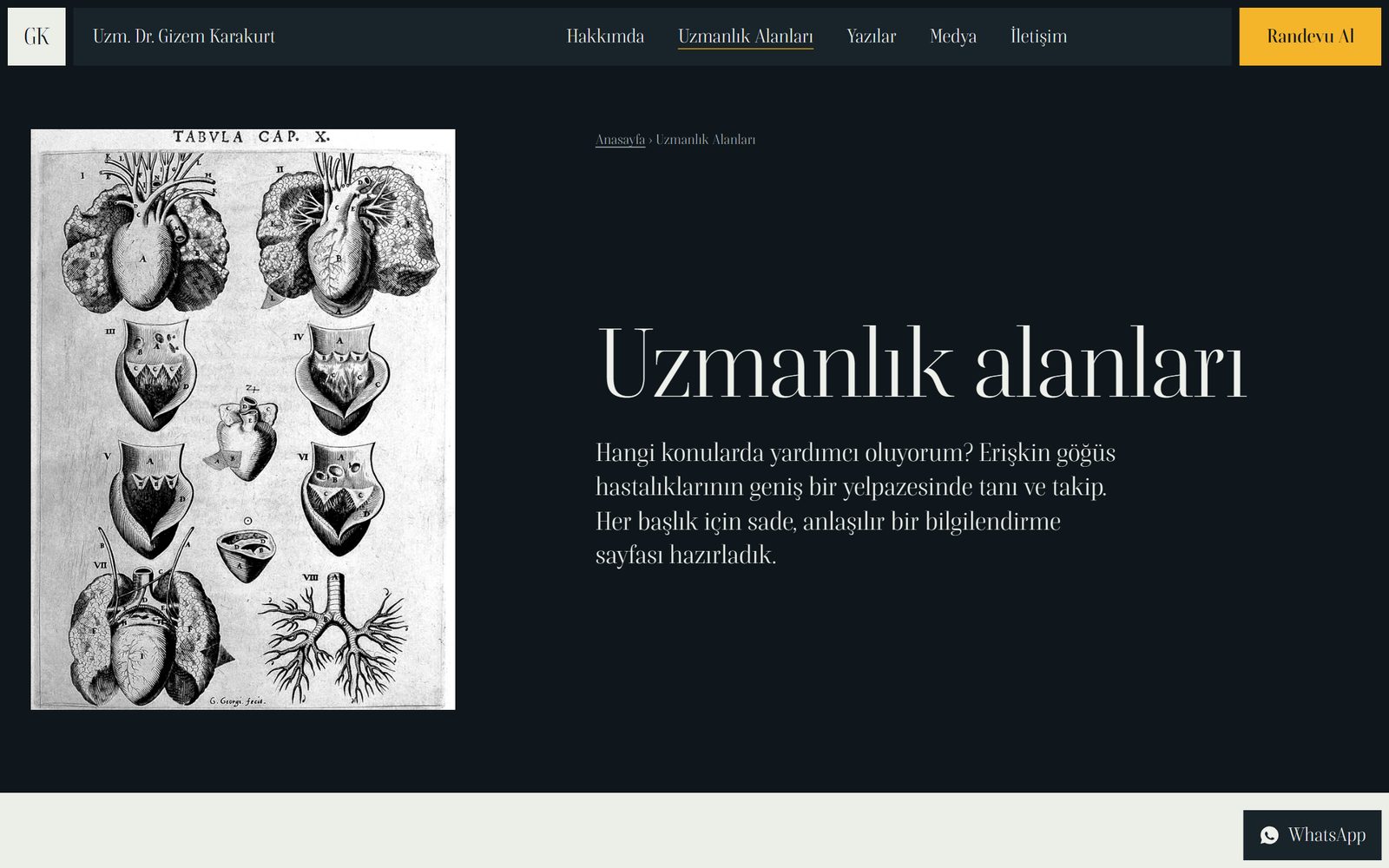
The codebase holds a complete site awaiting launch: home, about, expertise, eleven condition guides, a blog with three sample articles, media, appointment, contact, three legal pages, an image-sources page and a 404 page. Because the site is not yet published, every feature below is marked in progress, even where the code is finished.
Condition guides
In progressEleven pages built from one template, each covering what the condition is, common symptoms, diagnosis and management, with a mandatory medical disclaimer.
Article templates
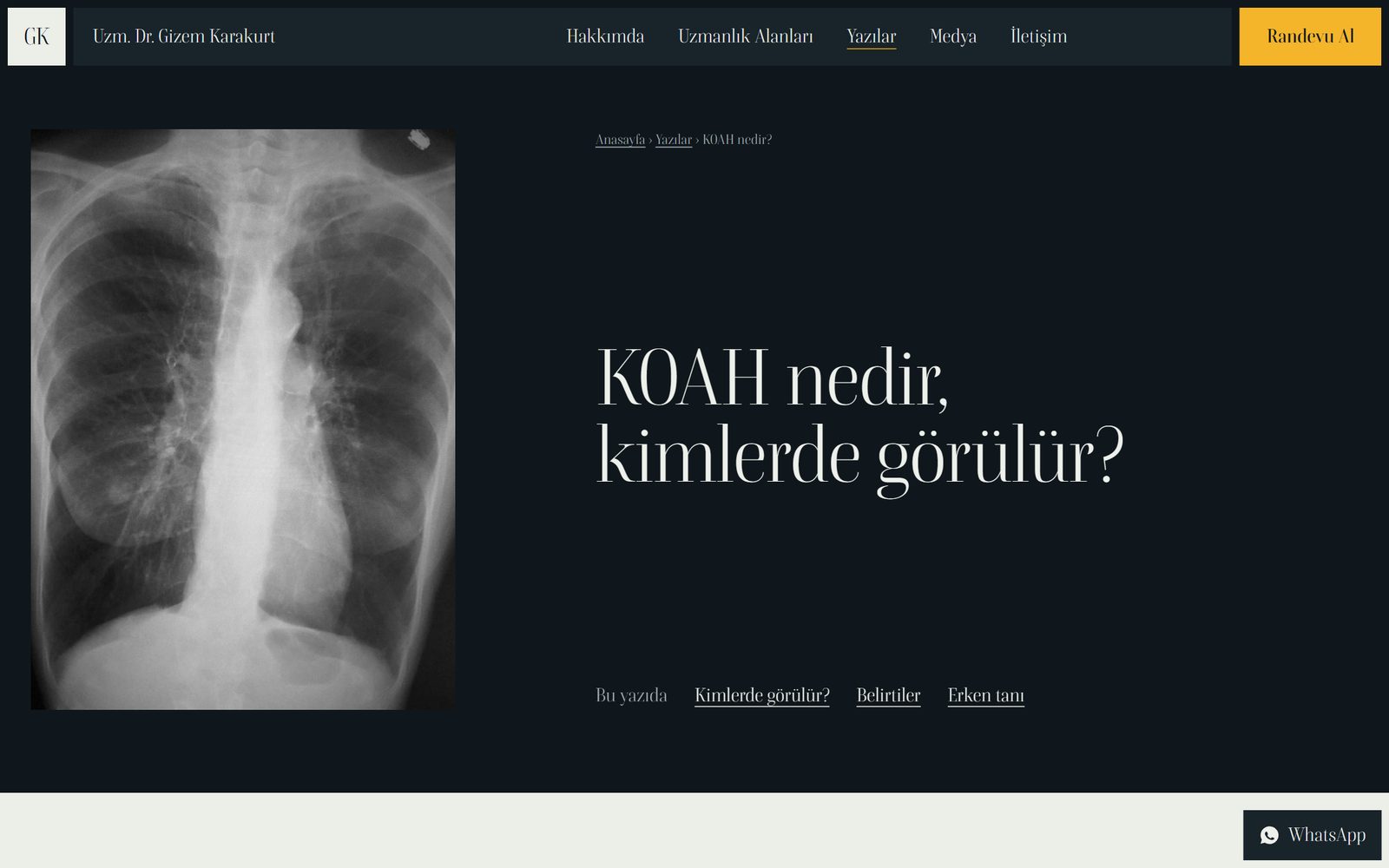
In progressA blog index and three sample articles in the same reading layout, ready for verified content.
Symptom guide
In progressA home page section that starts from the visitor's complaint. Without JavaScript, every answer is still shown as plain text.
Appointment guidance
In progressA page that explains the public hospital route (MHRS, ALO 182) openly. The online booking target is still to be confirmed by the client.
Contact form with KVKK consent
In progressA validated form that requires consent to the KVKK notice before sending. It has no backend yet; a form service still needs to be connected.
Legal and image-source pages
In progressKVKK notice, privacy policy and legal disclaimer as sample texts awaiting a lawyer's review, plus a page crediting every archival image and its licence.
Search groundwork
In progressPhysician, MedicalWebPage and MedicalCondition structured data, canonical URLs, Open Graph tags, a sitemap and robots.txt. Analytics stays commented out until a measurement ID is supplied.
How it works
The site is static, with no CMS, framework or build step. The navigation and footer are written into every page on purpose, so search engines see complete pages. One stylesheet carries the “Rapor” design: a single serif typeface, flat colour fields, square corners and a vertical axis at about 42 percent of the page where headings and the reading column begin. Images come from open-licensed medical archives.
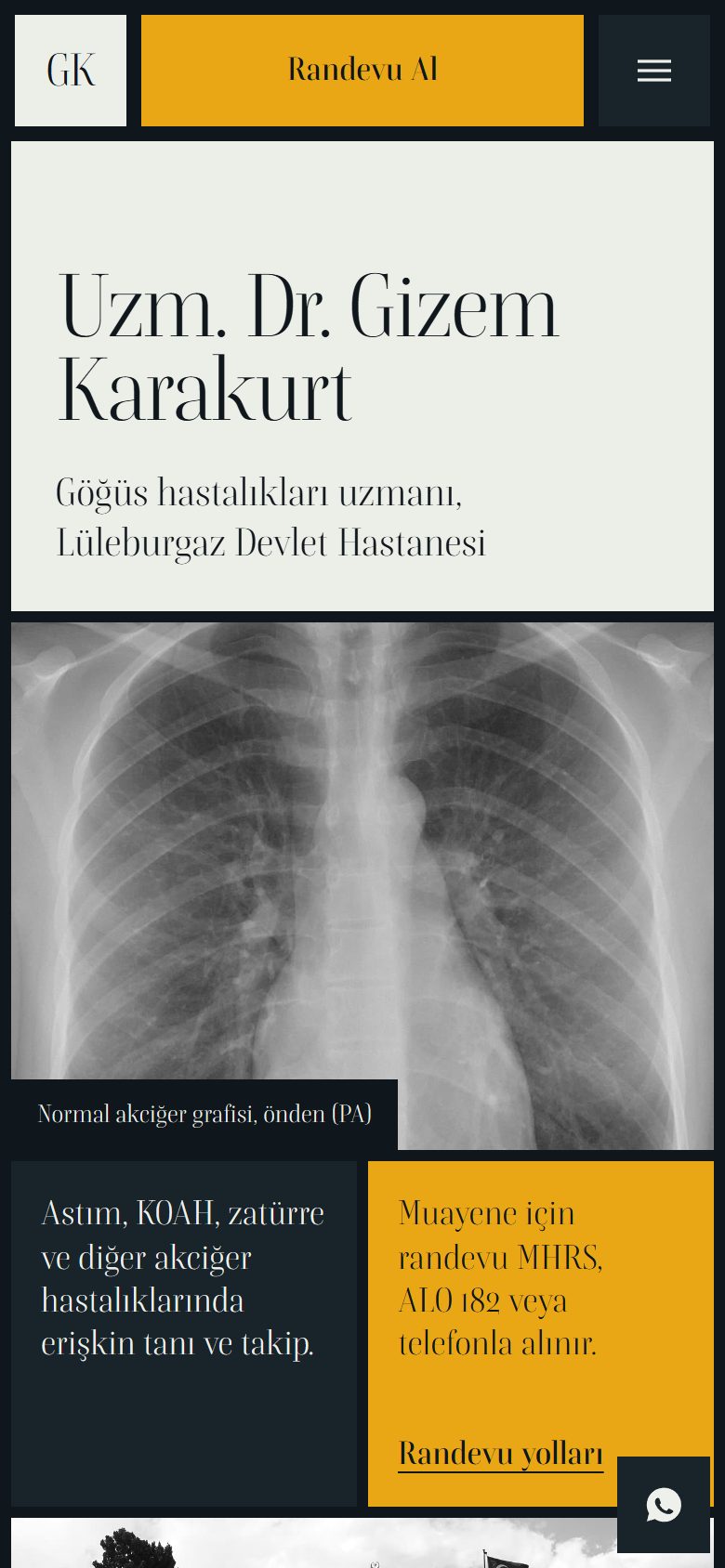
A small script adds the mobile menu, the cookie banner, form validation, stubbed analytics hooks on appointment buttons, the symptom guide and a motion layer that switches off for visitors who prefer reduced motion. A new condition page is made by copying the template, editing its meta tags and schema, and adding it to the lists and the sitemap.
Preparing for launch
Content is edited directly in the HTML files, and the README explains each routine task: adding a condition, adding an article, and recording the source and licence of any new image. The README also lists thirteen items that must be resolved before publication, from the real phone number and booking route to the legal texts and the social sharing image.
Decisions behind it
Scope followed the client brief: smoking cessation and sleep apnoea are deliberately not featured, and the bronchoscopy page stays only if the doctor confirms she performs it. The visual direction was chosen from three presented design directions. Launch is gated on confirmed contact details, a working booking path and legal review, because a broken booking embed or an unchecked legal text costs more trust than a later launch date.
What it shows
The outputs are a complete, documented codebase and an explicit launch checklist. The site is not live, so there are no traffic, ranking or appointment figures, and I make no claims about them. The work shows how I approach a trust-sensitive domain: honest booking information, visible disclaimers and nothing published that has not been confirmed.
Technical, operational and managerial
Technical
Hand-written, static pages with one stylesheet and one script. Structured data describes the physician, each medical page and each condition. Page titles and address data target local searches. Accessibility details include a skip link, buttons that announce their expanded state, descriptive image text and reduced-motion support.
Operational
Conditions, articles and appointments each have a clear place, and every medical page links back to an appointment. The contact form will not send without KVKK consent. Every image has a recorded source and licence, and templates make it routine to add a condition or an article.
Managerial
The brief's limits on positioning shaped the scope. Placeholders are marked rather than guessed, and the launch checklist names what the client, a lawyer and the booking provider must confirm. This is launch coordination, not legal advice or a compliance certification.
Questions answered
Is Gönenç Türkekul a doctor?
No. The medical practice belongs to Uzm. Dr. Gizem Karakurt. I developed the website and do not provide healthcare services or medical advice.
Is the website live?
Not yet. The site is built, but contact details, the booking route, photography and the legal texts must be confirmed before it is published. When I checked on 25 October 2026 the domain did not resolve.
Can patients book an appointment through the site?
The appointment page explains the official public hospital routes, MHRS and ALO 182. Whether an online booking link is added depends on the client's confirmation; the site will not publish an embed that does not work.
How does the site handle medical content responsibly?
Every condition and article page carries a medical disclaimer. There are no patient testimonials or comparative claims, and the archival images are credited and never presented as the doctor's patients or clinic.
How does the site help people find it in search?
Each page has a descriptive title, a canonical URL and medical structured data, and a sitemap lists every page. Local search is supported through page titles and address data.
Proof and links
- Website domainPre-launch. The domain did not resolve when checked on 25 October 2026.
- Source codeThe repository is not linked publicly.
Related work
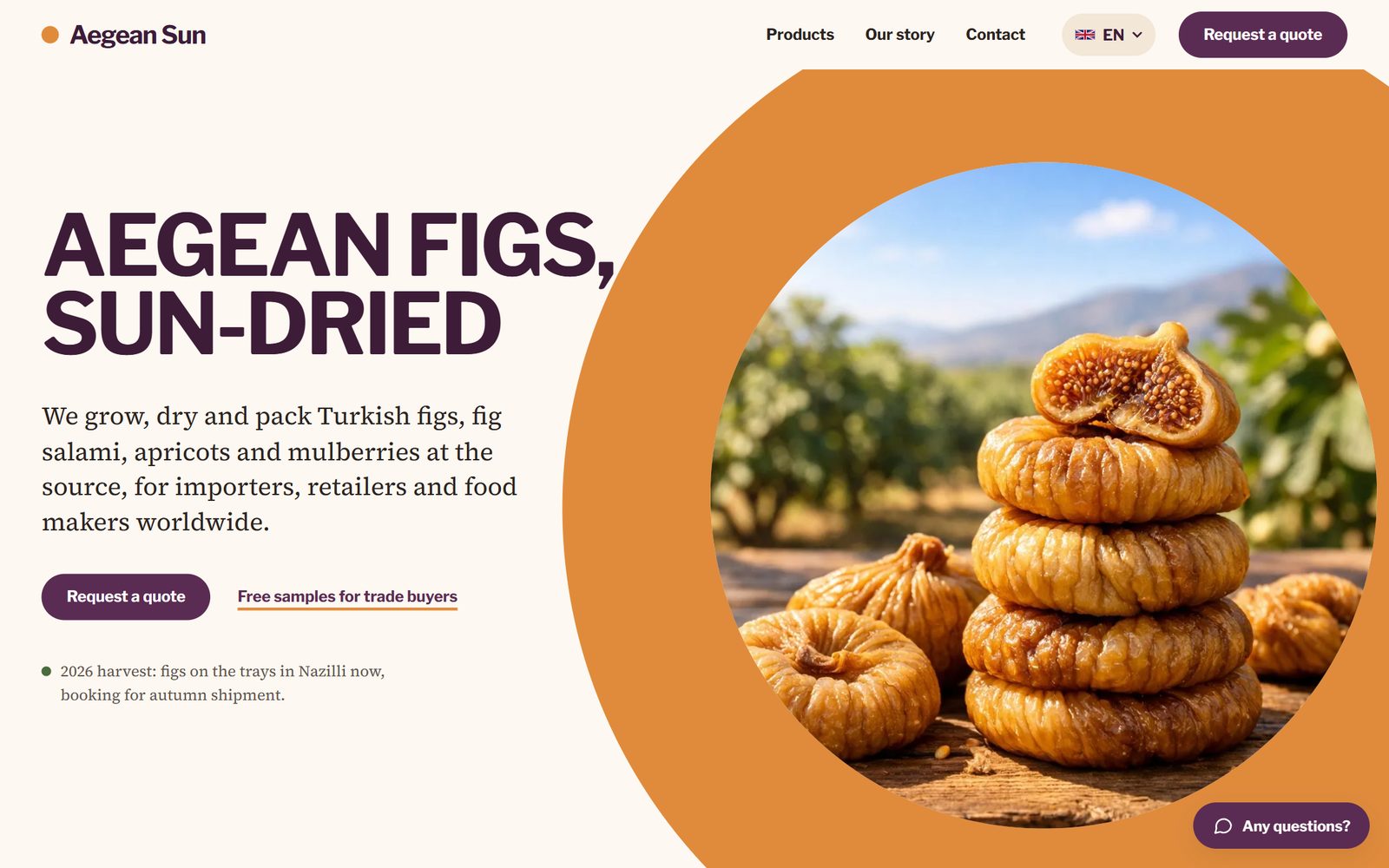 Aegean Sun FruitProduct or buildA bilingual English and Turkish website I developed for an independent dried-fruit trading business, built to present its range to trade buyers and collect enquiries.Websites & Digital ExperiencesServiceFor firms and professionals who need a website that explains what they do, earns trust and is easy to find. Content architecture, UX direction and a responsive build scoped to the real audience.SEO/GEO-Ready Information ArchitectureServiceFor websites whose products or services are hard for people, search engines and AI answer tools to understand. Content inventory, page models, internal links and technical search foundations.
Need a site like this one?