Notkolik
A note-taking app for football commentators that stamps every note with the match minute, so observations made during a game can be found again on air.
Software product · Personally developed
- Status
- Live on AndroidThe Android app is on Google Play and the product site answers at notkolik.com (checked 25 October 2026). The iPhone version is in TestFlight testing and not yet in the App Store. The app is free to use.
- My role
- Developed by Gönenç. I defined the product, wrote its requirements (PRD, SRS, epics and user stories), shaped the screens and built the commentator app, the Head Office panel, the API and the release pipeline.
In plain words
- What it is
- A mobile notebook for people who talk about football matches. Each note is saved with the minute of the match, and optionally the player and type of event it refers to.
- Who it is for
- Football commentators and others who take notes while watching a live game and need them during the broadcast or when writing afterwards.
- The problem it addresses
- Paper is fast but hard to search. When a moment from the first half becomes relevant again, a commentator needs to find that note in seconds without taking their eyes off the game.
Paper is fast, but it forgets
Commentators often keep notes on paper because it needs no setup. The trouble starts later: a note about a full-back pushing too high in the 20th minute is hard to find again at half-time, and it is not linked to the player or the event. Any replacement had to stay as quick as a pen, and work with weak stadium signal.
The product requirements set hard limits early. No typing in 22 players before kick-off, room for dictation while watching, a clock that can start late or be corrected, and no lost notes when something goes wrong.
My role
I developed Notkolik from the first document to the store release. I wrote the PRD, SRS, epics and user stories, made the screen designs, and built the Expo app, the React Head Office panel and the .NET API on PostgreSQL. I also set up hosting, backups, the release pipeline to Google Play and TestFlight, and the import of fixtures and squads.
What exists today
The Android app and the landing page are public. The same codebase also builds the iPhone app, which is still in testing. The features below are in the current build; payment and a pro account appear only in planning documents and are marked as planned.
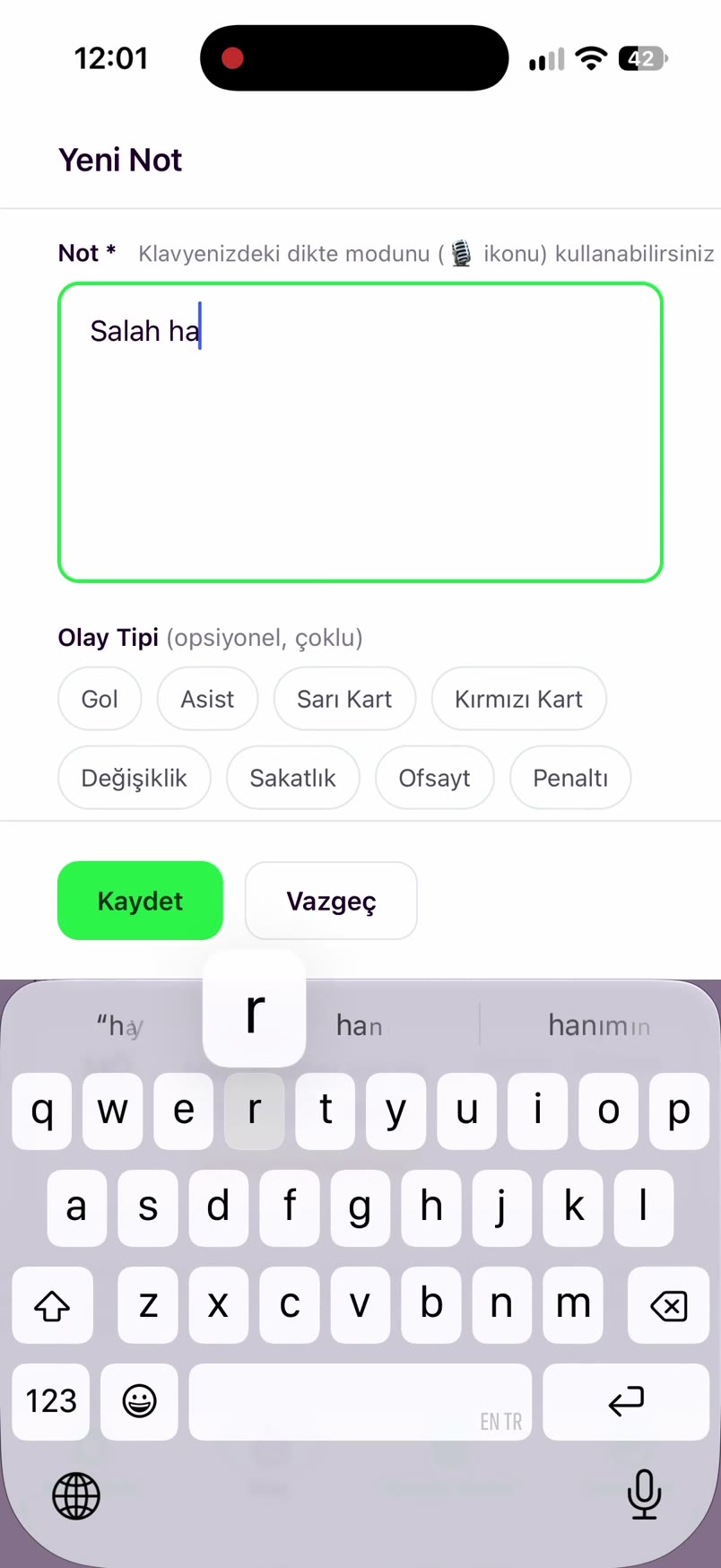
Notes stamped with the match minute
ShippedEach note shows the minute of the match, not the time on the phone. The clock starts from the live feed, and the commentator can correct it by hand.
Event tags and players
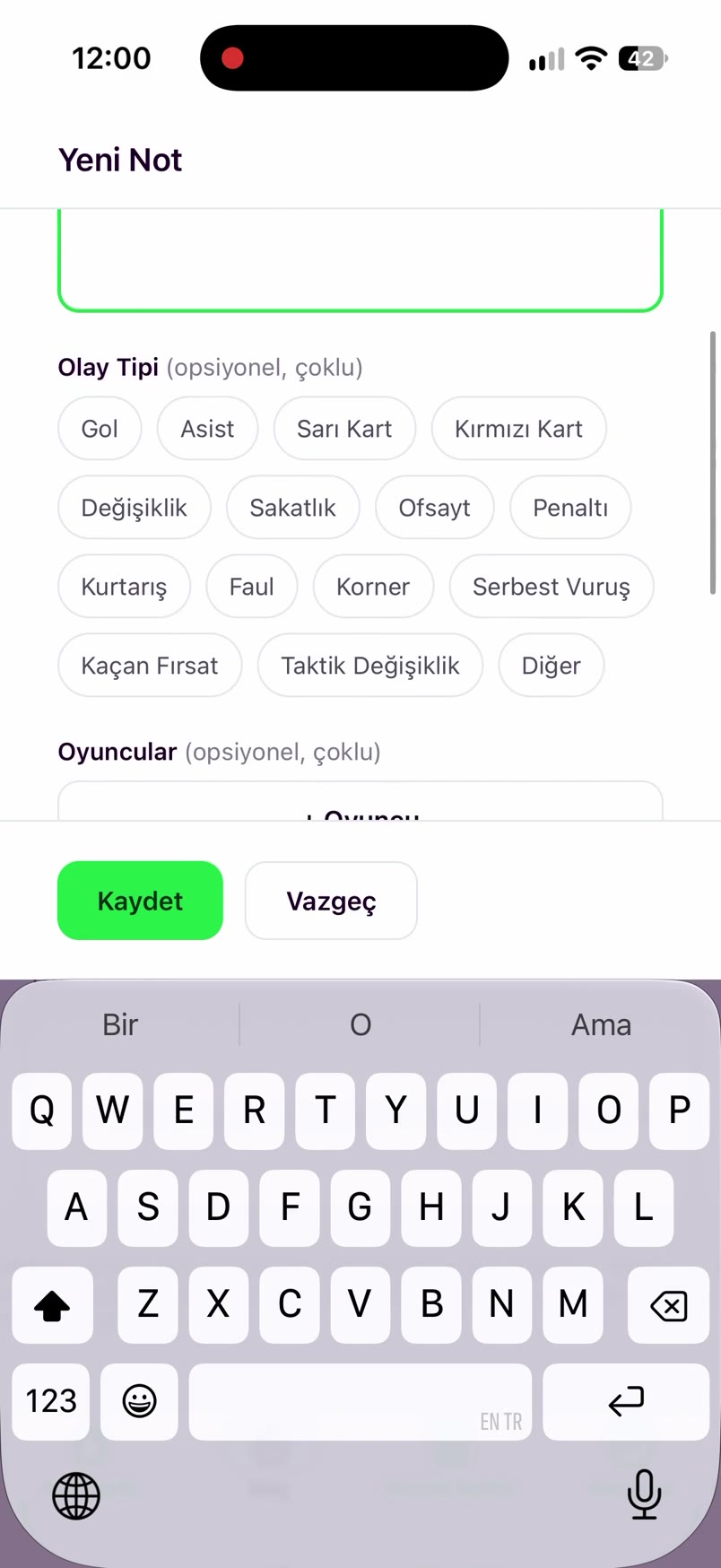
ShippedFifteen ready-made tags such as goal, card or missed chance, plus a way to mark which player a note is about.
Live match context
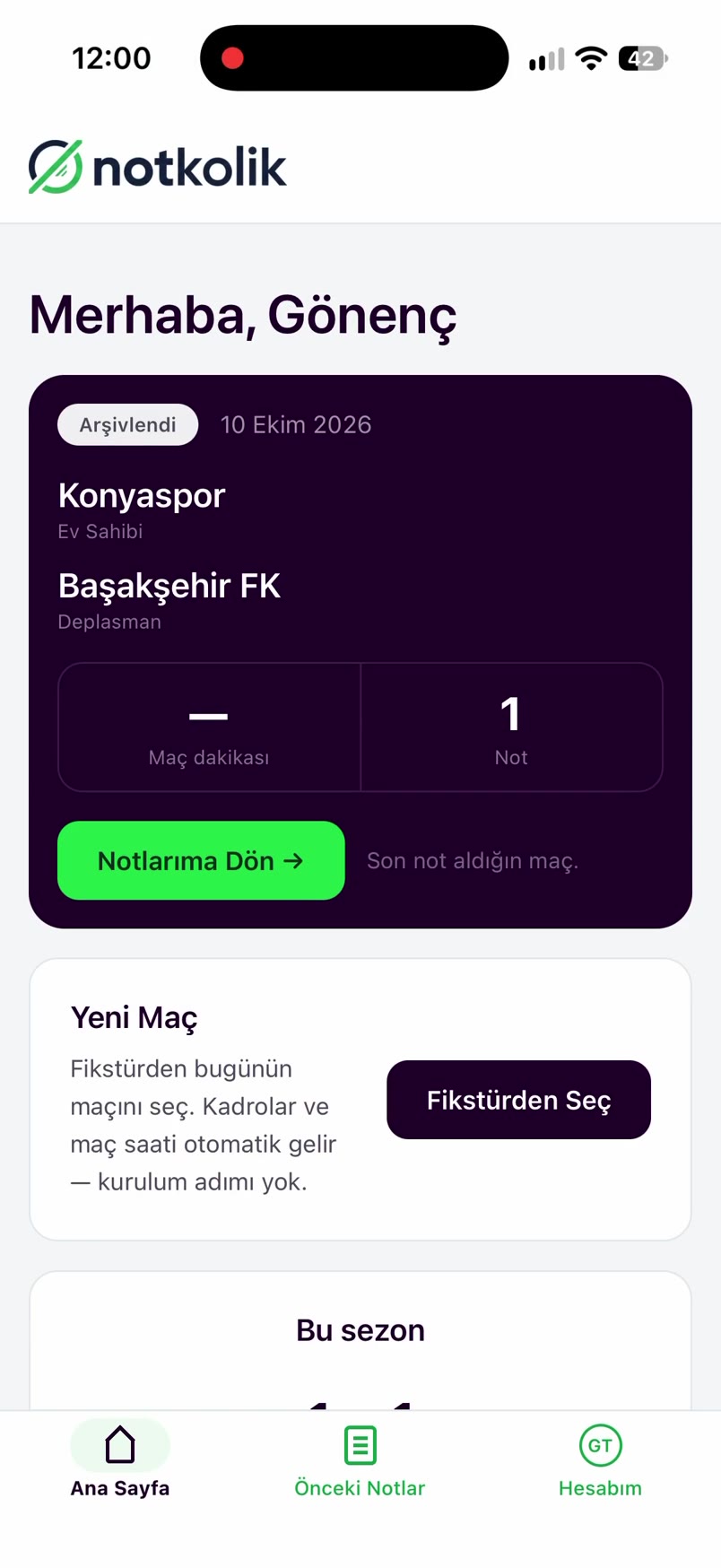
ShippedLine-ups, score and match events arrive from a live data feed and appear on a timeline beside the commentator's own notes.
Works without signal
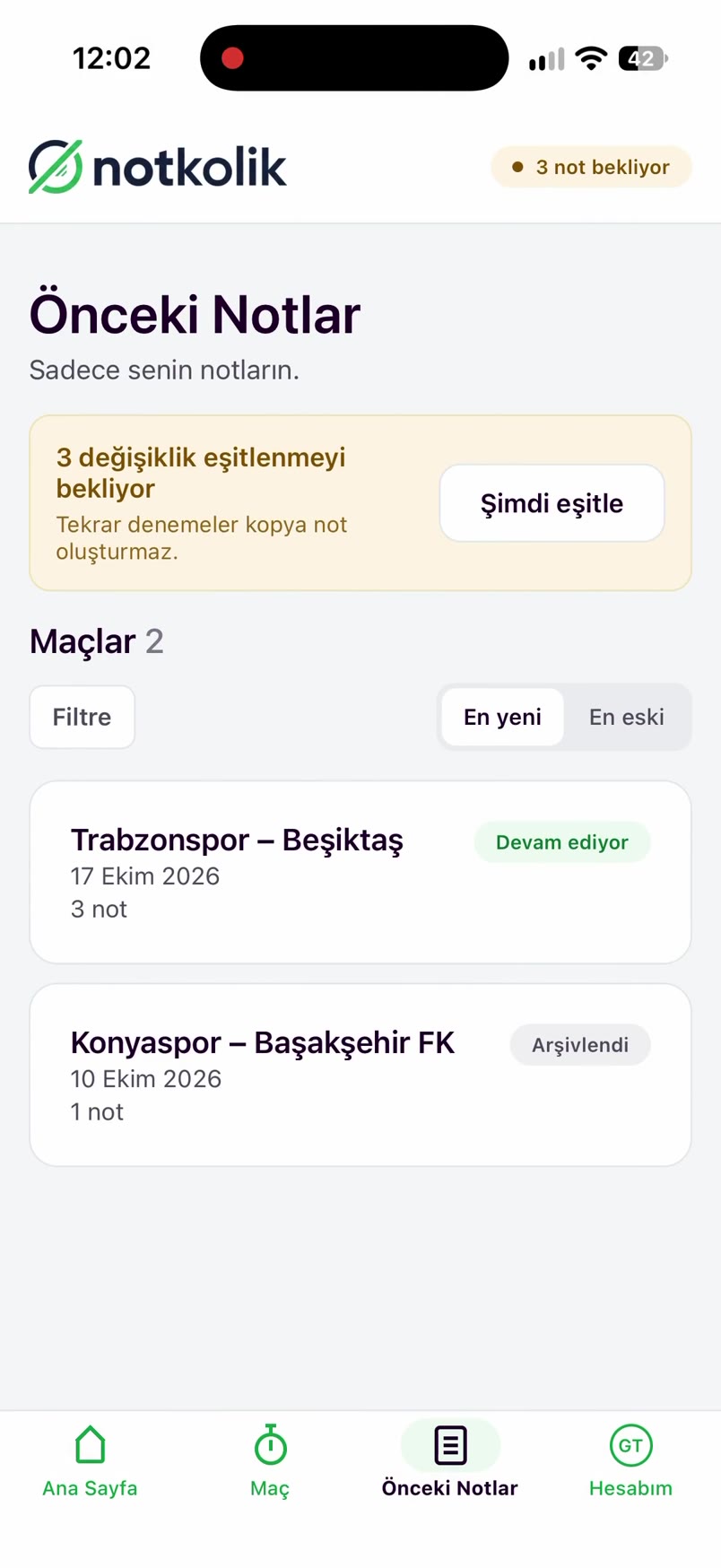
ShippedNotes are stored on the phone first and sync to the account when the connection returns.
Pinned notes and a 48-hour window
ShippedA note can be pinned to the top. After the final whistle, notes stay editable for 48 hours.
Previous notes and PDF export
ShippedPast matches can be filtered by date and team, and all notes of a match can be shared as a PDF.
Guest, Google and Apple sign-in
ShippedAnyone can try a match as a guest and keep those notes when they create a Google account. Apple sign-in is built for the iPhone app.
Head Office panel
ShippedA web panel for fixtures, teams, squads, users and a read-only list of notes that shows only the first 20 characters until a note is opened.
iPhone app in the App Store
In progressBuilt and in TestFlight testing. Store review is a separate, manual step.
Paid plan and pro account
PlannedListed for a later phase in the design documents. Nothing is built.
How it works
One Expo codebase builds the Android and iPhone apps. Notes are written to a local database and placed in an outbox, so a note is saved the moment it is typed and uploaded when the network allows. A .NET API on PostgreSQL owns accounts, matches and the rules, including the 48-hour edit window. It issues its own tokens after Google, Apple or guest sign-in.
Fixtures, squads and live events come from external football data sources on a schedule, with a backup source when the main feed is unavailable. The Head Office panel is a separate React web app that uses the same API.
Running it day to day
There is one production environment. A push to the release branch deploys the API, the web apps and the landing page, and phone updates go out over the air when the native build allows it. A nightly backup runs, and a restore has been rehearsed.
Most of the operational work is football data: importing fixtures, matching club and player names across sources, merging duplicates and checking that each match links to the right live feed. The deployment status file records each change and its reason.
Decisions behind it
The MVP scope was frozen in writing and split into phases: web first, then the iOS and Android stores, then payments. Some choices traded safety for speed on purpose, such as closing the test environment and relying on a single production setup. A demo match was removed once it confused first-time visitors. Analytics stays out until the privacy text and consent banner are updated first.
What it shows
The outputs are a public Android app, a working iPhone build in testing, a Head Office panel and a written product specification with numbered requirements. I do not publish download, user or match figures. The value is intended rather than measured: commentators keep the speed of paper and gain notes they can search.
Technical, operational and managerial
Technical
The API is .NET on PostgreSQL, the commentator app is Expo and the Head Office panel is React. Offline-first sync means every note is saved on the phone before it reaches the server. Live data integration covers fixtures, line-ups and events from external sources with a fallback, and deployment runs through Docker, a Cloudflare tunnel and automated store builds.
Operational
The workflow follows a commentator's match: pick the fixture, let the clock start itself, write or dictate notes, and find them again at half-time or the next day. On the operator side, Head Office keeps fixtures, teams and squads correct, because a note is only as useful as the match data around it.
Managerial
Discovery started from the commentator's constraints, not from features. The requirements carry permanent IDs, so a rule is quoted rather than rewritten. The MVP was scoped in phases, and release management covers store builds, over-the-air updates and when to send a build for review.
Questions answered
What is Notkolik?
A note-taking app for football commentators. Each note is saved with the minute of the match and can be tagged with a player and an event type, so it is easy to find again during the broadcast.
Is Notkolik available?
Yes, on Android through Google Play, free of charge. The iPhone version is in TestFlight testing and not yet in the App Store, as of 25 October 2026.
How is a note linked to a match?
The commentator picks the match from the fixture list. The match clock starts from the live feed, and each note takes the minute shown on that clock. If the clock is wrong, it can be corrected by hand.
Can notes be found after the match?
Yes. Notes stay editable for 48 hours after the final whistle and remain readable afterwards. Past matches can be filtered by date and team, and a match's notes can be exported as a PDF.
Does Notkolik write commentary or analyse the match?
No. It does not generate commentary or analysis. It stores the commentator's own observations and shows match events from a data feed beside them.
What was Gönenç's role?
I developed it: product definition, the requirements documents, screen design, the app, the admin panel, the API, hosting and the store releases.
Proof and links
- Product site (opens in a new tab)Turkish-language landing page. Reachable when checked on 25 October 2026.
- Google Play listing (opens in a new tab)Android app. Reachable when checked on 25 October 2026.
- Source codeThe repository is private.
Related work
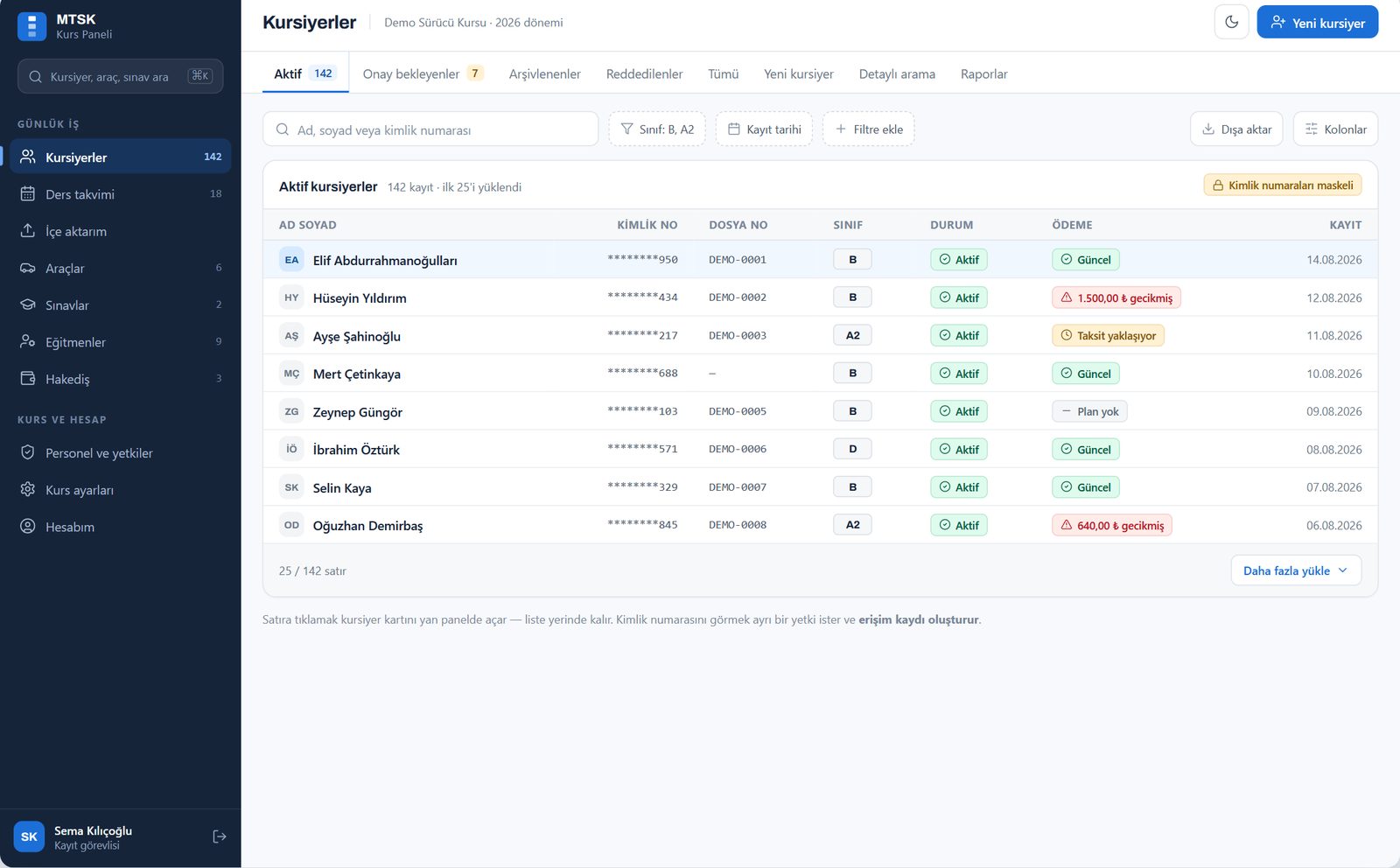 EhliyetProProduct or buildManagement software for Turkish driving schools that brings trainee records, lesson planning, exams, collections, fleet and instructor pay into one system.Product Strategy & MVP DefinitionServiceFor teams with more feature requests than clarity. A structured way to name the customer problem, frame the product opportunity and decide what belongs in the first release worth shipping.Technical Product DeliveryServiceFor teams with an agreed product scope that now has to become a buildable, releasable system. Feasibility, architecture trade-offs, requirements, vendor coordination and release readiness in one line of sight.
Questions about this product?